

Multifamily Fitness Center Design: The Developer’s Guide to ROI & Resident Retention
Published by: Opti-Fit Fitness Solutions Category: Multi-Housing Trends & Design
In today’s competitive multi-housing market, a row of treadmills is no longer an amenity—it’s just a baseline. To attract high-value residents and justify premium rents, you need a fitness center that rivals a boutique studio. At Opti-Fit, we believe the gym is the heartbeat of your community. This Multifamily Fitness Center Design guide combines our years of field experience with 2025 industry data to help you plan, budget, and build a facility that drives lease renewals.
Executive Summary: Why Design Matters
Most developers treat fitness centers as an afterthought, but data shows that a well-designed gym is a top factor in lease signing decisions. A strategic approach ensures you aren’t just filling a room with equipment, but creating a lifestyle hub.
-
The Space Standard: Successful properties typically allocate 12–15 sq. ft. per apartment unit for their fitness amenity.
-
The Budget Reality: Quality matters. Expect to budget between $1,500 and $2,500 per piece for durable commercial cardio, and $50–$100 per square foot for premium flooring and installation.
-
The Opti-Fit Advantage: We go beyond selling equipment. We provide comprehensive 2D and 3D layout planning to ensure your space is ADA compliant, functional, and visually stunning.
1. Space Planning: The “Golden Ratio” for Multifamily
One of the most common questions we receive at Opti-Fit is how large a fitness center should be. Rather than guessing, we recommend using a utilization formula based on industry data. Statistics suggest that 1.5% to 3% of your resident population will use the fitness center simultaneously during peak hours, which are typically 6:00 AM – 8:00 AM and 5:00 PM – 7:00 PM.
The Opti-Fit Calculation Example:
-
Total Units: 200
-
Estimated Residents: 300
-
Peak Users (3%): 9 concurrent users
-
Space Per User: 50 sq. ft. (allows for safety zones and circulation)
-
Minimum Active Floor Space: 450 sq. ft.
Note: This calculation covers the equipment floor area only. You must add an additional 20–30% of space for entryways, lockers, and ADA turning radii.
Zoning Your Layout: A great gym flows logically. We recommend dividing your floor plan into three distinct zones:
-
Cardio Zone (30%): Best placed near windows, mirrors, or audio-visual walls to keep users engaged.
-
Strength Zone (40%): The most popular area in modern gyms, requiring ample safety clearance for free weights and machines.
-
Functional/Recovery Zone (30%): An open area with turf or wood-style flooring dedicated to HIIT, yoga, and stretching.
2. Equipment Packages by Community Size
Avoid the costly mistake of purchasing residential “home gym” equipment for a commercial setting. It will not withstand daily use and increases your liability. Below is the recommended commercial equipment mix based on our project history.
Boutique / Small Community (<100 Units)
-
Cardio: 2 Treadmills, 1 Elliptical, and 1 Recumbent or Upright Bike.
-
Strength: 1 Dual-Stack Functional Trainer (Cable Machine), a set of Dumbbells (5–50 lbs), and 1 Adjustable Bench.
-
Recommendation: We often suggest Matrix Fitness cardio units for this tier due to their high durability and premium aesthetic.
Mid-Size Community (100–300 Units)
-
Cardio: 4 Treadmills, 2 Ellipticals, 1 ClimbMill (Stair Climber), and 2 Indoor Cycles.
-
Strength: 1 Smith Machine, a full Dumbbell Rack (5–75 lbs), 2 Adjustable Benches, and a Kettlebell set.
-
Functional: A TRX Suspension bay or a wall-mounted storage rig to save floor space.
Luxury / Large Complex (300+ Units)
-
Cardio: 6+ Treadmills, 3 Ellipticals, 2 ClimbMills, 2 Rowers, and 4 Studio Cycles.
-
Strength: Half-Racks for serious lifters, a variety of Plate-Loaded machines, and Dumbbells ranging from 5–100 lbs.
-
Wellness: Consider a dedicated “Recovery Room” featuring HydroMassage chairs or percussion therapy stations.
3. The Financials: Cost vs. ROI
Understanding your “Cost Per Square Foot” is vital for an accurate pro forma. We break down the typical investment required for a high-performing facility.
-
Commercial Equipment: Expect to invest between $25,000 and $75,000+ depending on the size of the facility. Opti-Fit offers financing and leasing options to help keep your initial capital focused on construction.
-
Flooring: Budget for $4 – $12 per sq. ft. Do not cut corners here; high-quality rubber flooring is essential for protecting your concrete foundation and reducing noise.
-
Preventative Maintenance: Plan for $800 – $2,000 per year. Regular service visits can extend the life of your equipment by 3–5 years, saving money in the long run.
The ROI Argument According to the National Multifamily Housing Council (NMHC), a top-tier fitness center supports a rent premium of $50–$100 per month per unit compared to competitive properties with outdated gyms.
4. Design & Aesthetics: Creating the “Vibe”
Residents today do not want a basement gym; they want a destination. The design elements you choose are just as important as the machinery.
-
Flooring: We use Ecore or premium rubber tiles for strength areas to provide shock absorption. For yoga studios, we recommend Luxury Vinyl Tile (LVT) for its warmth and inviting aesthetic.
-
Mirrors: Floor-to-ceiling mirrors are essential. They make small spaces feel twice as large and are critical for lifting safety so users can check their form.
-
Branding: Your gym should feel like part of the brand. Opti-Fit can customize equipment frames and upholstery to match your property’s specific color palette.
5. 2025 Trend: The “Hybrid” Amenity
The biggest shift we are seeing in multifamily design is the merger of fitness and remote work. Residents appreciate spaces that allow them to multitask and manage their busy lives.
-
The “Work-Out” Space: Consider including a co-working bar with USB charging ports overlooking the gym. Residents love the ability to transition instantly from a Zoom call to a treadmill run.
-
Digital Coaching: If your budget does not allow for a personal trainer, install equipment with built-in coaching consoles (like Matrix Touch Consoles) or virtual training kiosks to guide users.
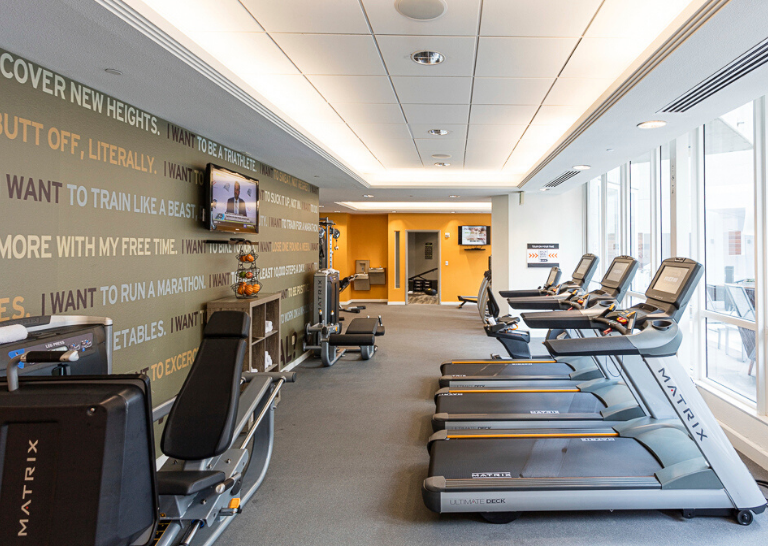
388 Beale Apartments

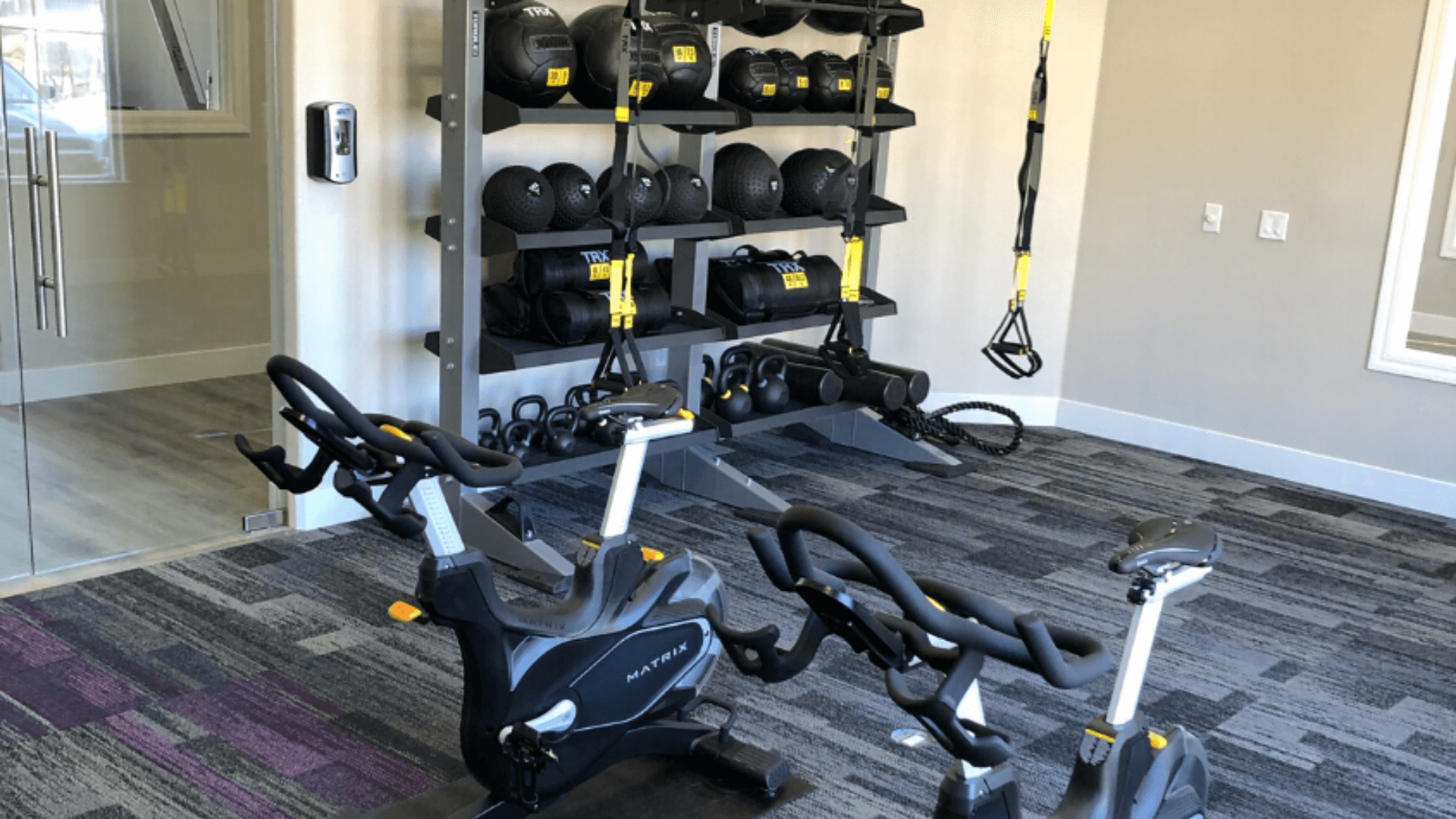
Coventry Park Apartments & Townhomes

Talavera Ridge Fitness Center
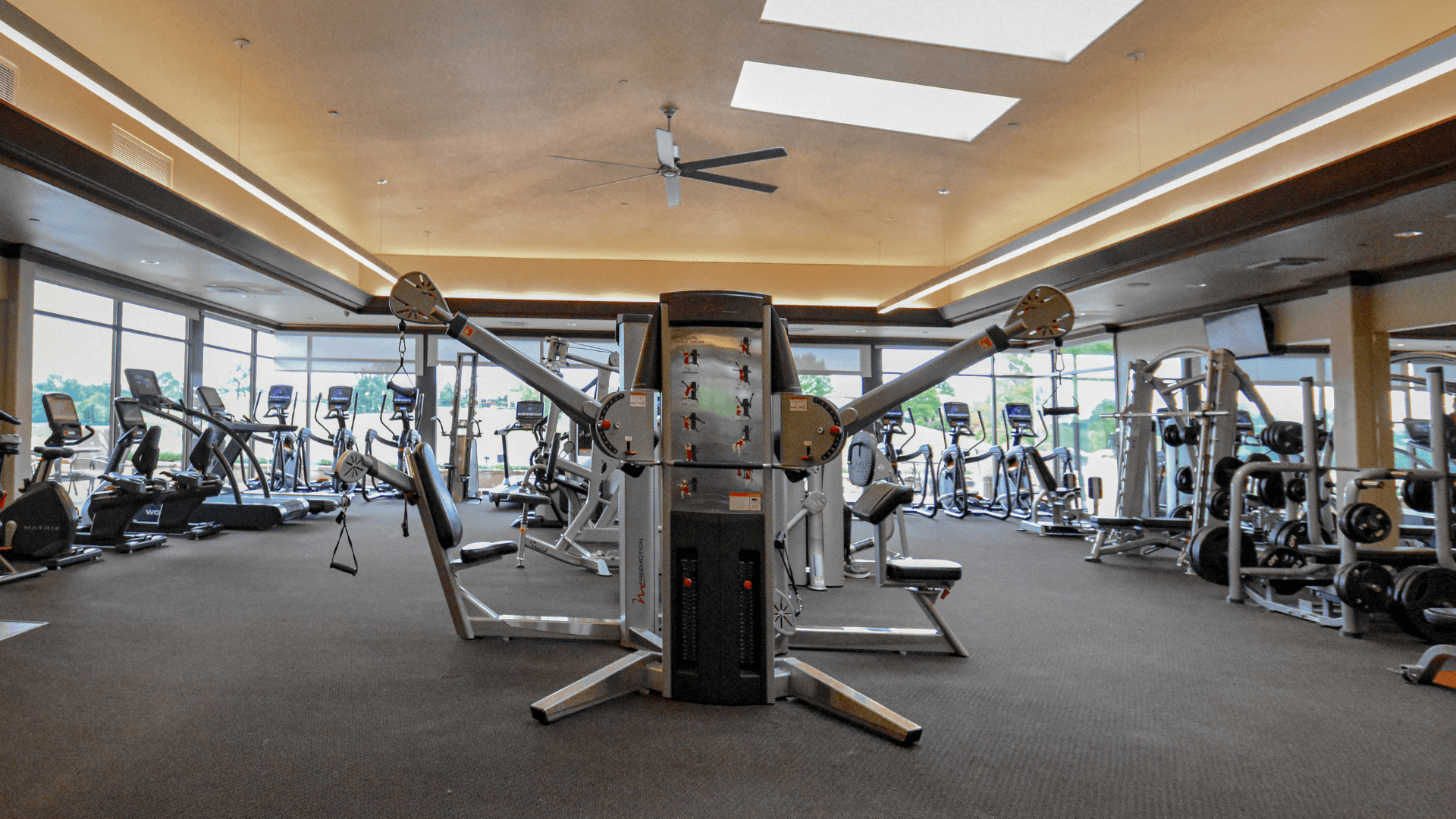
Gio Apartments
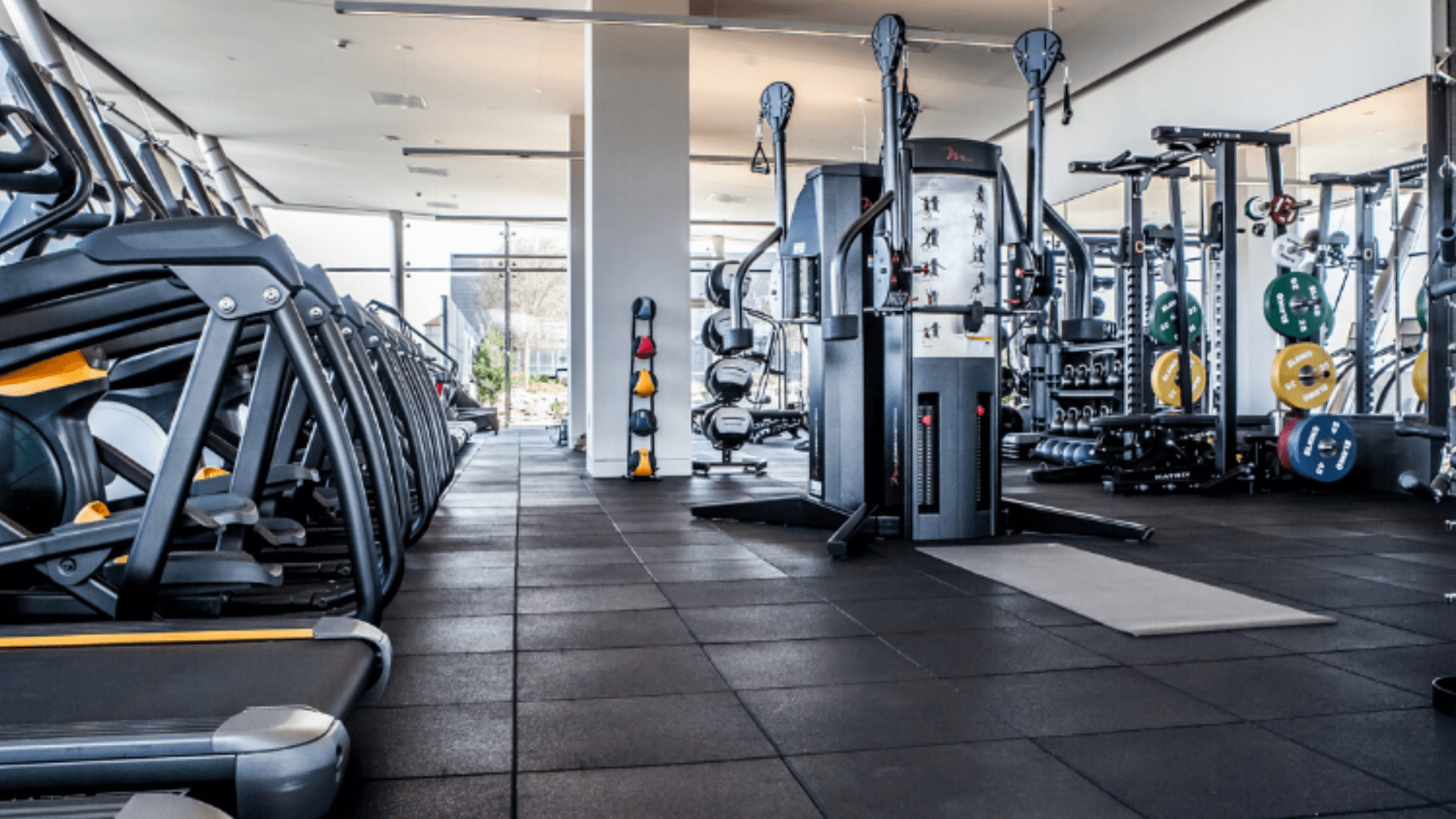
Ten Thousand Residences

Vive Luxe
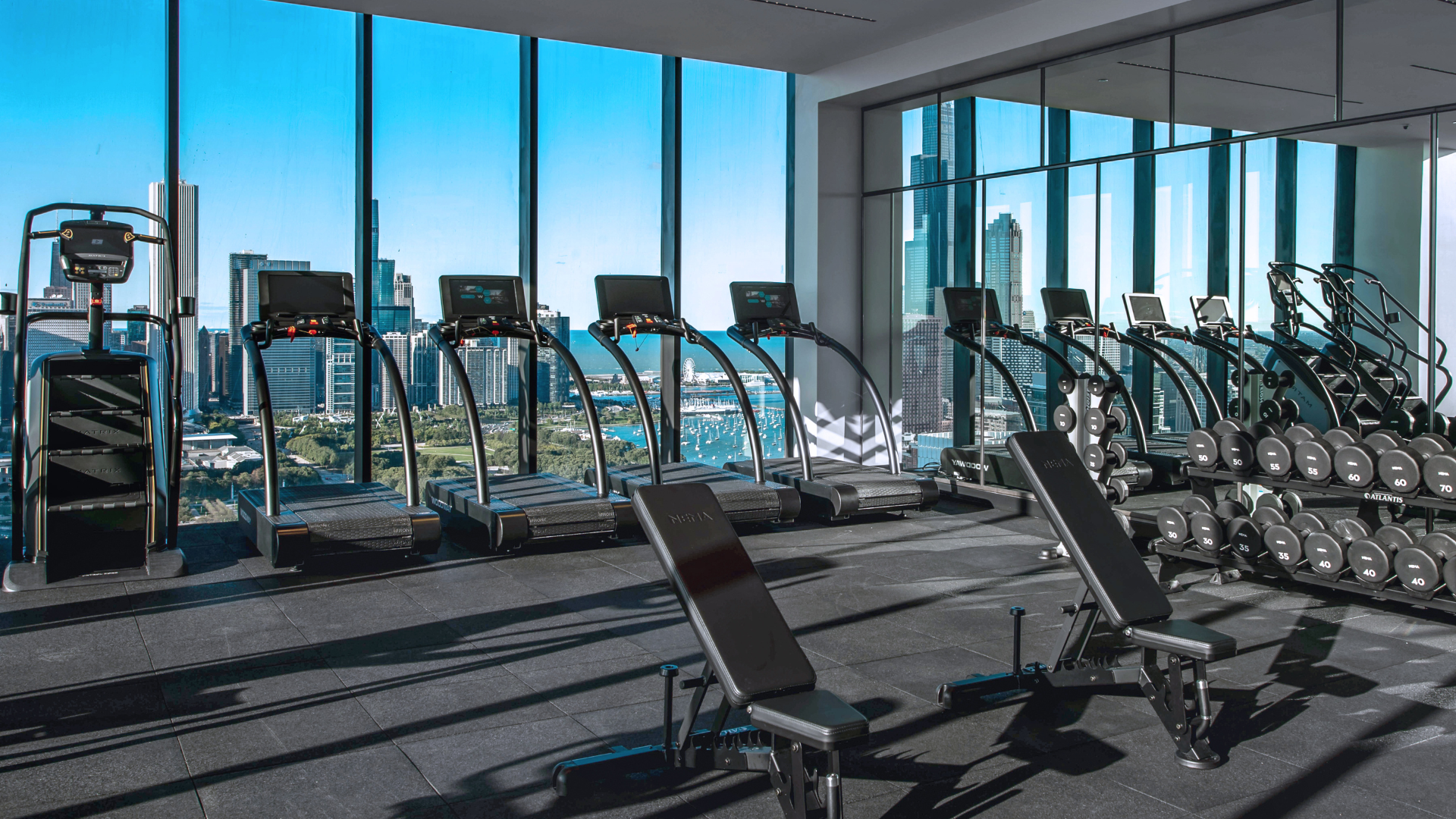
NEMA

Park at Santa Monica

Chorus

Lumina Towers
The smoother a multi-family fitness center runs the more value it offers. How do you get to that level, though? Programming your fitness center is about getting the most value out of it. Here are some suggestions.
Frequently Asked Questions (FAQ)
Does Opti-Fit provide facility layout designs? Yes. We don’t just ship boxes. We provide detailed 2D and 3D renderings to help you visualize traffic flow, electrical placement, and ADA compliance before you spend a dime on construction.
What is the best flooring for noise reduction in multi-story buildings? We recommend a 1-inch thick composite tile or a specialized acoustic underlayment. This is critical if your fitness center is located above residential units to prevent noise complaints.
How often should we replace our equipment? Commercial cardio equipment typically lasts 5–7 years depending on usage volume. Strength equipment can last 10+ years if proper preventative maintenance is performed regularly.
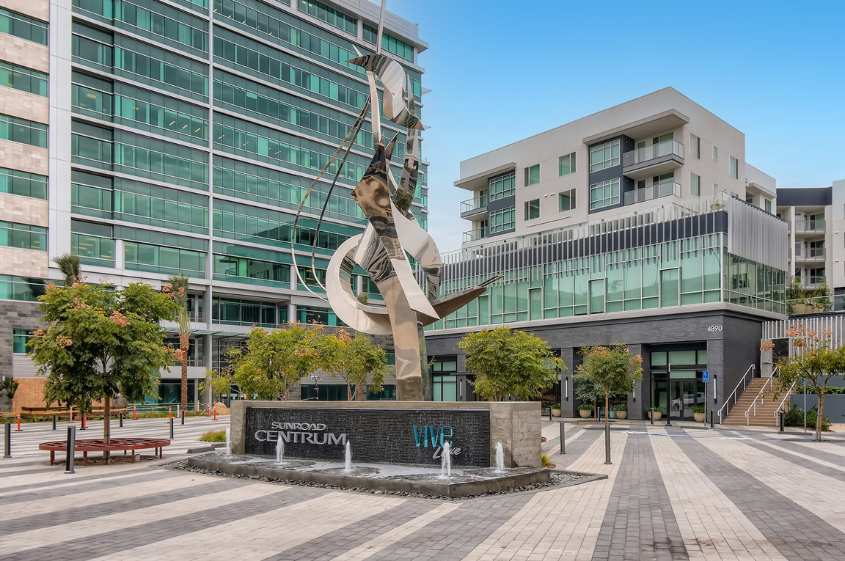
Ready to Upgrade Your Amenity Space? Whether you are breaking ground on a new development or renovating an existing gym, Opti-Fit is your partner in fitness solutions. Contact us today for a free design consultation.