

Title: The Definitive Guide to Commercial Gym Equipment in Seattle, Washington
Author: Brad Boggs | Commercial Fitness Consultant & Head of Design @ Opti-Fit
Category: Commercial Fitness Design, Facility Planning
The Definitive Guide to Commercial Gym Equipment in Seattle, WA
By Brad Boggs
In the Pacific Northwest, fitness isn’t just a hobby—it’s a lifestyle rooted in our culture. From the tech hubs of South Lake Union to the expanding multifamily developments in Bellevue and Tukwila, the demand for high-quality training spaces is at an all-time high.
As a designer and consultant based right here in the PNW, I’ve seen firsthand how the Seattle market is evolving. For facility managers, developers, and business owners, sourcing commercial gym equipment in Seattle presents a unique set of challenges. Unlike buying a treadmill for a home garage, outfitting a commercial facility requires a deep understanding of biomechanics, space optimization, and operational durability.
This guide explores everything you need to know about navigating the Seattle commercial fitness market, why “light commercial” often fails, and how to design a facility that stands out in a competitive real estate market.
The Seattle Fitness Landscape: Why Quality Matters Here
Seattle is one of the most active cities in the United States. With our long rainy season (the famous “gray”), indoor fitness facilities are not a luxury; they are a necessity for mental and physical health.
For property managers and corporate wellness directors, this means your tenants and employees are educated users. They know the difference between a wobbly, residential-grade elliptical and a rock-solid commercial machine.
The “Tech Expectations” Effect
Seattle’s workforce is dominated by tech giants (Amazon, Microsoft, Google) who have set a high bar for on-site amenities. If you are managing a corporate office or a luxury apartment complex, your gym is a primary retention tool. Putting inferior equipment in your facility signals to prospective tenants that you are cutting corners.
Commercial vs. Residential Equipment: Knowing the Difference
One of the biggest mistakes I see in the local market—often driven by big-box retail stores—is the installation of residential or “light commercial” equipment in high-traffic zones.
When you browse local retail stores (like Johnson Fitness or The Fitness Outlet), their primary business is selling to homeowners. While they carry some commercial lines, their expertise often stops at the sale.
1. Usage Ratings & Warranty Gaps
True commercial equipment (Class S) is rated for 12+ hours of continuous daily use.
- Residential Warranty: Voided immediately if used in a common area (like an HOA gym).
- Light Commercial: Good for <6 hours/day (fire stations, small studios).
- Full Commercial: Built for 24/7 gyms, universities, and large apartment complexes.
Expert Note: Always ask for the “wear parts” warranty. In our humid environment, knowing how a brand covers electronics and belts is crucial.
2. Biomechanics & User Safety
As someone with a degree in Exercise Science, this is where I focus most. Commercial gym equipment are designed for a 95th-percentile user range. This means they are safe for a 5’0″ user and a 6’5″ user alike. Residential machines often shrink the frame to save shipping costs, compromising the “feel” of the movement and increasing injury risk.
Top Commercial Fitness Brands for the Pacific Northwest
As a commercial fitness partner, I only recommend brands that have strong local service networks. Even the best equipment breaks; if parts have to ship from overseas with no local technicians, your “Out of Order” sign will stay up for weeks.
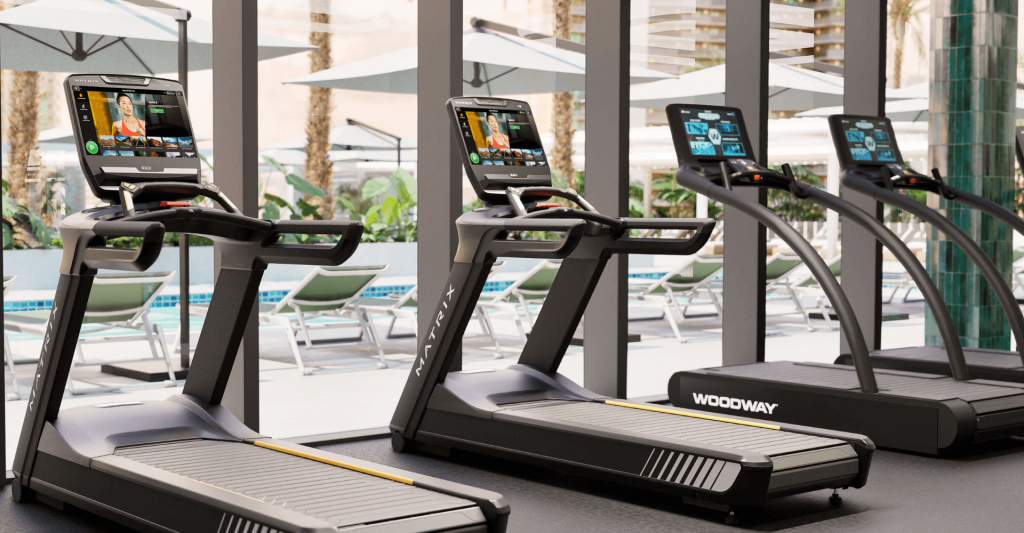
Matrix Fitness
Matrix has gained massive ground in the multifamily and hospitality sectors. Their connected consoles are perfect for tech-savvy Seattle users who want to track their lifts or stream content while they run. They offer one of the best “Total Cost of Ownership” ratios in the industry.
Functional Training Experts (Escape, Keiser & BeaverFit)
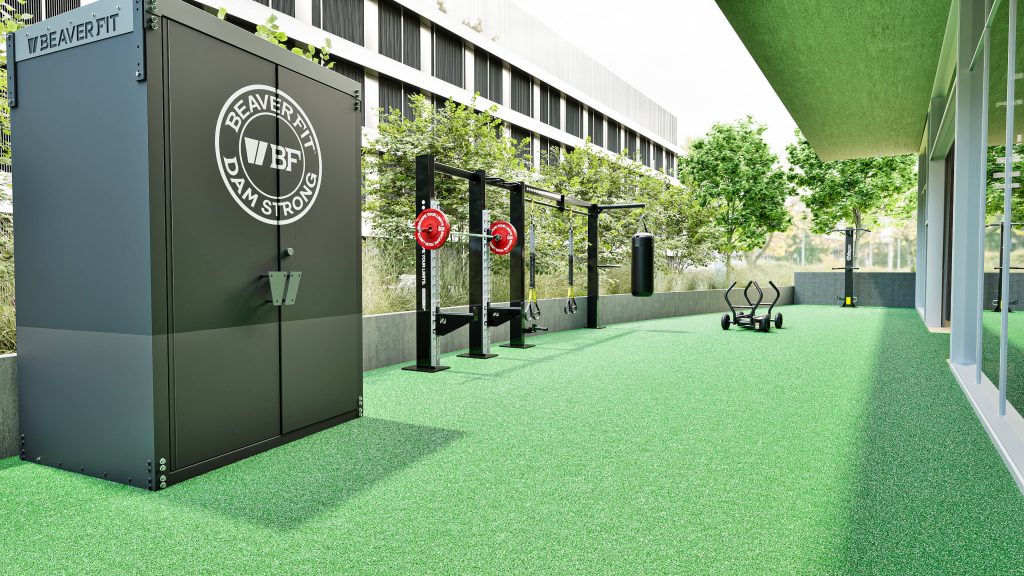
Seattleites love functional training. The days of endless rows of selectorized machines are fading. Modern Seattle gyms need turf zones, sleds, kettlebells, and rigs. Brands like Escape Fitness and BeaverFit allow us to build “playgrounds” for adults that mimic the outdoor activities we love in the PNW.
Strategic Gym Design: Maximizing Seattle Real Estate
Real estate in Seattle is expensive. Whether you are in a high-rise in Belltown or a mixed-use complex in Redmond, every square foot counts.
The “Zoning” Approach
Don’t just line up treadmills against a wall. At Opti-Fit, we use a Zoning Methodology to increase flow and safety:
- The Arrival Zone: Open space for stretching and warm-ups.
- The Cardio Zone: Placed near windows (views of the Sound or skyline increase dwell time).
- The Strength Zone: Heavy lifting areas with proper flooring to dampen noise.
- The Functional Zone: Turf tracks and rigs.
Noise Mitigation in Multi-Story Builds
A common issue in Seattle’s stick-built apartment complexes is noise transfer. A dropped deadlift on the 4th floor can sound like a bomb going off to the tenant on the 3rd floor.
- Solution: We utilize specialized acoustic flooring and platforms like Ecore that absorb vibration. This is a technical detail that retail stores rarely discuss, but it is critical for developers.
Installation & Logistics: Navigating the City
Buying the equipment is the easy part. Getting 20,000 lbs of steel into a second-story fitness center on 4th & Pike is where the experts shine.
The “Last Mile” Challenge
Seattle’s narrow streets, one-way grids, and strict loading dock times require precise logistics.
- Staging: We often stage equipment at our partner warehouses and deliver in “phases” to match the construction schedule.
- Assembly: Our technicians are factory-certified. This is vital because improper assembly (e.g., untorqued bolts on a cable machine) is a massive liability risk for facility owners.
- Removal: We handle the extraction and recycling of old equipment, ensuring it doesn’t end up in a landfill.
Preventative Maintenance: The Unsung Hero
The damp PNW climate can be tough on electronics. Sweat + Humidity + Dust = Circuit Board Failure.
Unlike a retail purchase, where you are on your own after delivery, a Commercial Fitness Partner provides a Preventative Maintenance (PM) contract.
- Quarterly Visits: We clean motor compartments, align running belts, and lubricate guide rods.
- Liability Trail: We keep a service log. If a user is injured and sues, claiming “negligence,” your maintenance log is your first line of defense.
Why Partner with a Specialist vs. A Retail Store?
When you search for “commercial gym equipment Seattle,” you will see results for stores like Top Fitness or The Fitness Outlet. These are reputable retailers, but their business model is built around Transactional Sales (selling a unit).
A Commercial Specialist operates on a Consultative Model:
- Needs Analysis: I don’t just sell you what’s in stock; I analyze your demographic. A senior living facility in Ballard needs vastly different gear than a tech startup office in Fremont.
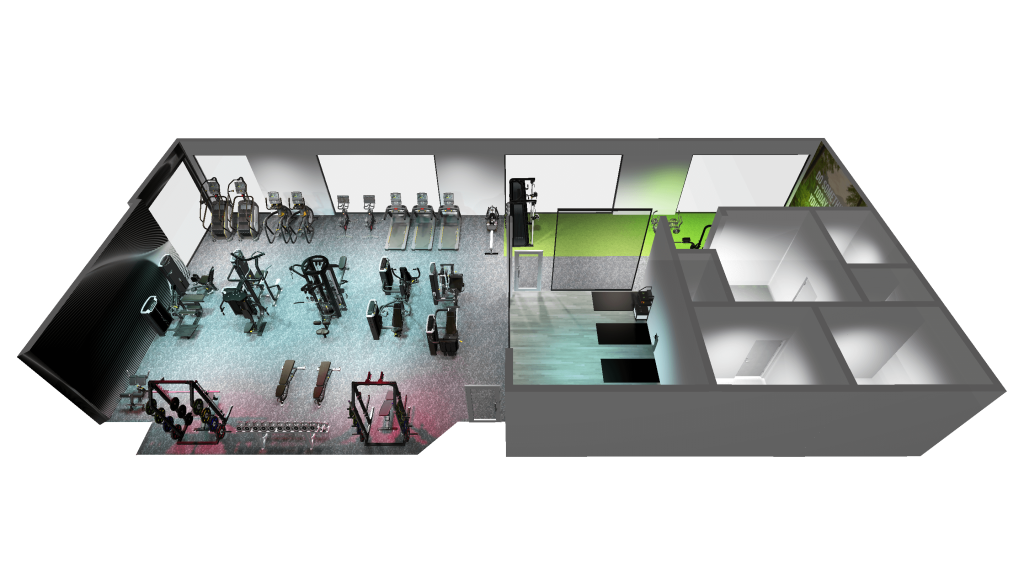
- 3D Visualization: We provide CAD drawings and 3D renders so you can “walk through” the space before spending a dime.
- Long-Term Partnership: We are there for the life of the warranty and beyond.
Case Study Snapshot: The Multifamily Upgrade
- Challenge: A property in Capitol Hill had an outdated gym filled with broken residential treadmills.
- Solution: We replaced the cardio with commercial-grade Matrix units, removed bulky single-station machines, and installed a functional training rig.
- Result: Resident complaints dropped to zero, and the leasing team now uses the gym as a primary closing tool on tours.
Conclusion: Elevate Your Facility
Your fitness facility is a reflection of your brand. In a city as fitness-conscious as Seattle, “good enough” equipment doesn’t cut it.
Don’t settle for a retail experience when you are building a commercial asset. Trust the experts who understand the intersection of design, biomechanics, and Seattle’s unique market demands.
Ready to transform your space?
Contact me today for a complimentary consultation and 3D floor plan. Let’s build something exceptional together.
About the Author: Brad Boggs
Brad Boggs is a Commercial Fitness Consultant at Opti-Fit Fitness Solutions and Head of Design at Gym Design Group. Based in Portland, OR, Brad services clients throughout the Pacific Northwest.
- Experience: 20+ years in the fitness industry, including roles as a Program Director and Fitness Consultant.
- Education: Bachelor’s degree in Exercise Science; former collegiate athlete and team captain.
- Notable Projects: Knot Springs Spa and Social Club (Portland), Ayer Luxury Apartments (Seattle), Tetherow Resort (Bend).
- Specialty: Integrating high-end 3D layout design with commercial equipment supply to create performance-driven facilities.
Connect with Brad on LinkedIn or via Opti-Fit.com to discuss your next project.