

The Expert’s Guide to Commercial Gym Equipment in San Diego: Beyond the Showroom
By Jason Golec MBA, B.S. Exercise Physiology
If you are opening a fitness facility in San Diego, you likely already know that our city has one of the most competitive and educated fitness markets in the world. From high-end wellness clubs in La Jolla to gritty powerlifting warehouses in El Cajon, the standard here is exceptional.
When you start searching for commercial gym equipment in San Diego, you will inevitably run into the “big box” equipment retailers. You’ve probably already seen pages like San Diego Fitness Equipment or Fitness Warehouse USA. They do a fine job if you need a single treadmill for your garage.
But if you are building a commercial facility—whether it’s a boutique studio, a corporate wellness center, or a university weight room—buying off the rack from a showroom floor is a strategic error.
I have spent over 24 years in this industry, not just selling equipment, but designing facilities that work. I’ve won 14 world powerlifting titles and hold an MBA, so I look at gyms through two lenses: the athlete who needs biomechanical perfection, and the business owner who needs ROI.
This guide is your blueprint for sourcing commercial fitness equipment in Southern California without falling into the “retail trap.”
The San Diego Factor: Why Location Matters for Equipment
Most buyers assume gym equipment is the same whether you are in Phoenix, New York, or San Diego. That is false. Our specific geography and real estate market dictate what you should buy.
1. The Coastal Corrosion Challenge
If your facility is within five miles of the coast—think Pacific Beach, Del Mar, or Carlsbad—salt air is a silent budget killer. I have seen standard powder-coated rigs rust out in under three years in open-air setups.
- The Fix: You need equipment with industrial-grade zinc primers or double-powder coating. Brands like Atlantis or specific custom rigs are built to withstand the coastal layer. Standard “big box” retailers rarely mention this because they sell standard SKUs.
2. The Price Per Square Foot Reality
San Diego commercial real estate is expensive. In areas like Sorrento Valley or North Park, you cannot afford “dead space.”
- The Fix: You need multi-use footprint efficiency. A standard sprawling selectorized circuit might look good in a catalog, but in San Diego, you need functional trainers and modular rack systems that allow three people to train in the space of one machine. Design precedes purchase.
Commercial Equipment: The 3 Tiers of Quality
When analyzing competitors like SMAI or local warehouses, it is easy to get confused by “commercial” labels. In the industry, we categorize equipment into three distinct tiers. Knowing the difference will save you thousands.
Tier 1: Light Commercial (The “Garage Gym” Trap)
This is what you often find at local retail showrooms. It is designed for apartment complexes or heavy home use (4-6 hours of use per day).
- Common Brands: TuffStuff (Residential lines), Body-Solid, Inspire.
- Verdict: Avoid this for membership gyms. It will fail under the load of a 500-member base.
Tier 2: Standard Commercial
This is the workhorse equipment found in most franchises. It is built for 12+ hours of daily use.
- Common Brands: Precor, Life Fitness (Core lines).
- Verdict: Solid, but often overpriced if bought new without a dealer contract.
Tier 3: Premium & Performance Commercial
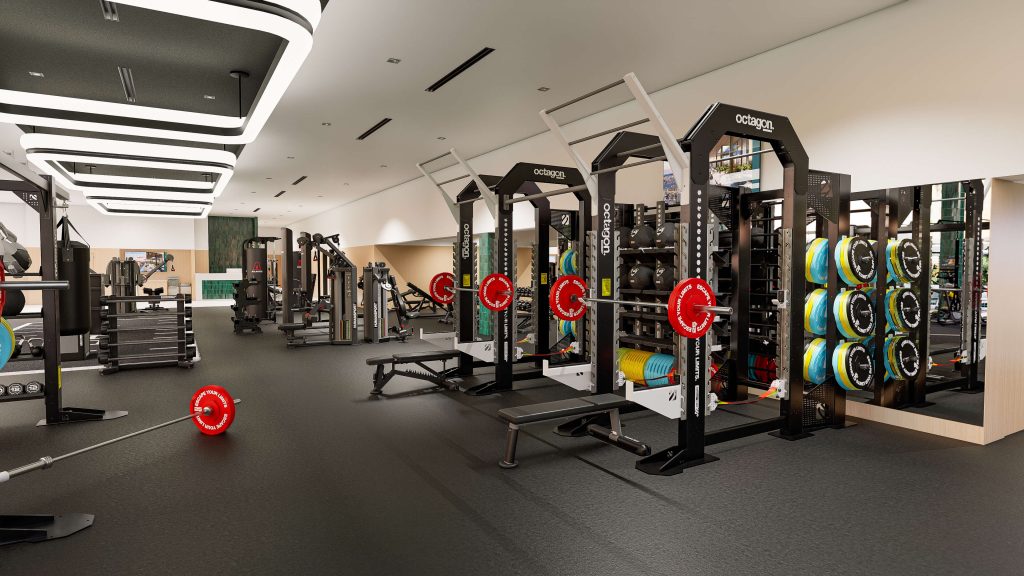
This is where Opti-Fit operates. This equipment is designed for biomechanics, extreme durability, and brand differentiation.
- Common Brands: Atlantis, Matrix Fitness, Woodway.
- Verdict: This is how you differentiate. If your gym has the same equipment as the apartment complex next door, why should members pay you $100/month?
Planning Your Facility: The Step Competitors Skip
The biggest difference between Opti-Fit and a retail store like San Diego Fitness Equipment is the order of operations.
- Retail Store Approach: Pick equipment -> Try to fit it in the room.
- Opti-Fit Approach: Design the experience -> Select the equipment to match.
The Flow-First Methodology
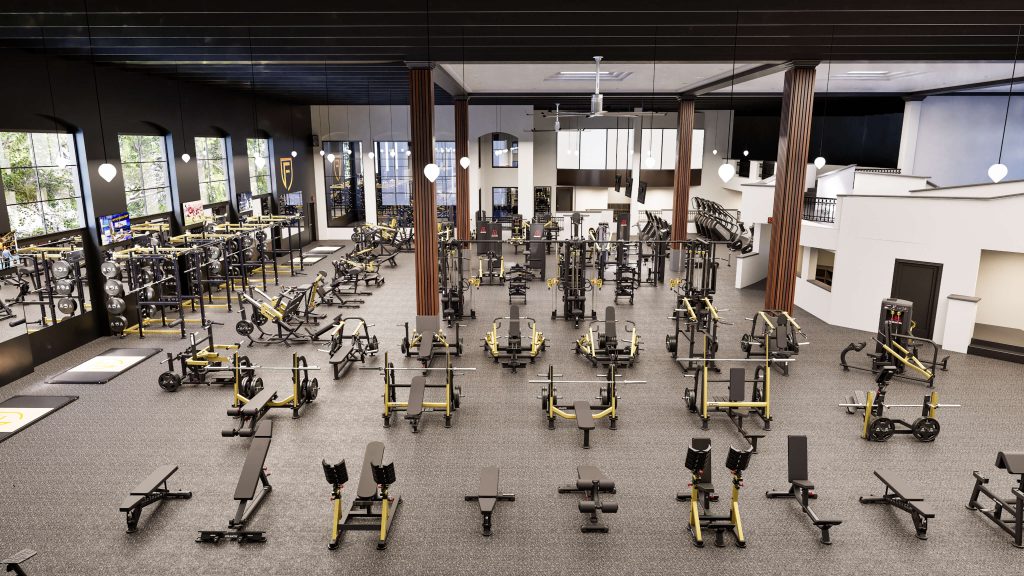
Before we talk about brands, we look at your CAD drawings. A 2,000 sq. ft. training floor in Miramar needs a different flow than a 2,000 sq. ft. corporate gym in downtown.
- Zoning: We create energy zones. Cardio shouldn’t face the heavy lifting area directly.
- Safety: In California, liability is a major concern. We ensure ADA compliance and safe clearance zones (something online cart-checkouts can’t do for you).
Sourcing the Best Equipment in Southern California
You have options when buying. Here is an honest breakdown of where you can go, and what you get.
1. The Local Retail Showrooms
Places like Fitness Warehouse USA or San Diego Fitness Equipment have physical locations in places like Clairemont Mesa.
- Pros: You can touch the gear immediately. Good for buying one or two pieces.
- Cons: Their business model is B2C (Business to Consumer). You are paying retail margins. They rarely have deep expertise in facility layout or high-performance biomechanics.
2. The Online “Box Droppers”
Sites like SMAI or big e-commerce giants.
- Pros: Cheap prices.
- Cons: You are on your own. Delivery is “curbside” (they drop a 1,000lb pallet in your parking lot). If a cable snaps in week two, good luck getting a technician to Chula Vista.
3. The Commercial Solution Partner (Opti-Fit)
We are not a store; we are a consultancy that supplies equipment.
- Pros: We access dealer pricing (wholesale). We handle logistics, installation, and bolt-down. We select from 50+ brands rather than pushing what is in stock.
- Cons: We don’t sell single dumbbells to individuals. We focus on complete facility solutions.
Key Equipment Categories: What to Look For
Cardio: The Necessary Evil
Cardio eats up budget and floor space.
- San Diego Trend: The “Socal” market is shifting away from rows of treadmills. We are seeing a massive surge in self-powered cardio (AirRunners, SkiErgs, Echo Bikes).
- My Advice: Don’t lease 20 treadmills. Buy 5 high-end slat-belt treadmills (Woodway or equivalent) and 10 self-powered units. It lowers your electrical bill and maintenance costs.
Strength: The Retention Builder
This is my personal wheelhouse. As a powerlifter, I know that a bad bench press can ruin a workout.
- The Bench Test: If a bench wobbles, your members will leave. Commercial benches must be heavy, 3×3 steel gauge or higher.
- Selectorized Machines: Look for “converging” and “diverging” axes. This mimics natural human movement. Many cheaper commercial lines move in fixed linear paths, which causes joint stress over
- time.
Flooring: The Foundation
Never overlook flooring. In San Diego, where many buildings are slab-on-grade, dropping weights causes vibrations that travel.
- Requirement: You need specialized acoustic flooring if you have neighbors. A simple 8mm rubber roll from a warehouse store won’t cut it. We often install 1-inch inlaid platforms to dampen sound and protect the slab.
Q&A: Commercial Gym Equipment in San Diego
To help you get answers fast, here are the most common questions I receive from local business owners.
Q: How much does it cost to equip a commercial gym in San Diego? A: For a standard 3,000 sq. ft. training facility, equipment costs generally range from $75,000 to $150,000, depending on the brand tier. Leasing options can bring this down to a monthly OpEx of $1,500 – $3,000.
Q: Can I lease commercial gym equipment in California? A: Yes. Leasing is often smarter for tax purposes (Section 179 deductions allow you to write off the full purchase price). Opti-Fit works with finance partners specifically for fitness builds.
Q: Who installs gym equipment in San Diego? A: Do not use a general mover. Gym equipment has high-tension cables and heavy-weight stacks. Opti-Fit uses certified installers who understand tensioning, bolt-down requirements for seismic safety (crucial in California), and calibration.
Q: What is the lead time for commercial equipment? A: Matrix Fitness or specialized rigs is usually 6-8 weeks. Overseas imports (standard cardio) can be 12-16 weeks. We plan your build schedule backwards from your Grand Opening to ensure you aren’t paying rent on an empty gym.
The Opti-Fit Difference: Experience Over Inventory
Why does Opti-Fit rank differently than the retail stores you searched for? Because we operate on a different value system.
Business owners were buying equipment, but they weren’t buying a business solution. They ended up with gyms that looked cluttered, flowed poorly, and had equipment that didn’t match their demographic.
My credentials—B.S. in Exercise Physiology, MBA, and 14 World Powerlifting Titles—are not just for show. They mean I understand the science of the movement and the math of the business.
When you work with us, you don’t just get a leg press. You get:
- 3D Visualization: See your gym before you buy.
- Brand Agnostic Selection: We pick the best leg press from Brand A and the best treadmill from Brand B.
- Local Support: We are based here. We know the landlords, the logistics, and the market.
Ready to Build?
If you are serious about opening a facility in San Diego that outperforms the competition, stop browsing product catalogs. Let’s talk about your vision.
Contact Jason Golec & The Opti-Fit Team, Your Partner in Fitness Design & Supply. Let’s have a conversation. Don’t settle for a residential retail experience for your commercial project.
Email: jgolec@opti-fit.com
Visit: Opti-Fit.com