

A Consultant’s Guide to Design, Supply, and Success
By Ryan Dantes Fitness Design Consultant, Opti-Fit M.S. Kinesiology | Former Gym Operator
The San Francisco Fitness Standard
If you are opening or upgrading a fitness facility in San Francisco, you already know the reality: the stakes here are higher.
In the Bay Area, “commercial gym equipment” isn’t just about finding a treadmill that works. It is about maximizing return on investment (ROI) in some of the most expensive real estate in the country. It is about catering to a clientele that is tech-savvy, data-driven, and expects a seamless integration of wellness and performance.
I have spent my career—from my academic roots in Kinesiology to operating facilities and now consulting—analyzing what makes a gym succeed. When I look at the local landscape, I see a lot of noise. You have big-box retailers like 360 Fitness Superstore pushing volume sales, generic lifestyle blogs from Balance Fitness, and remote warehouses like Buy & Sell Fitness trying to ship used gear from Florida to the Bay.
But San Francisco requires a different approach. You don’t just need a supplier; you need a partner who understands Space Efficiency, biomechanics, and logistics in a dense urban environment. This guide is my blueprint for navigating the commercial fitness market in Northern California.
1. Strategic Design: The “Rent-Per-Square-Foot” Reality
In San Francisco, whether you are in SoMa, the Marina, or the Financial District, your biggest competitor isn’t the gym down the street—it’s your lease.
Many local retailers will happily sell you a massive, footprint-heavy selectorized machine. At Opti-Fit, we take a different approach. Before we discuss brands, we discuss flow.
The Opti-Fit Philosophy: Function First
Because of my background in Kinesiology, I don’t look at equipment as furniture; I look at it as a biomechanical tool. In a tight SF studio, every piece of equipment must justify its existence.
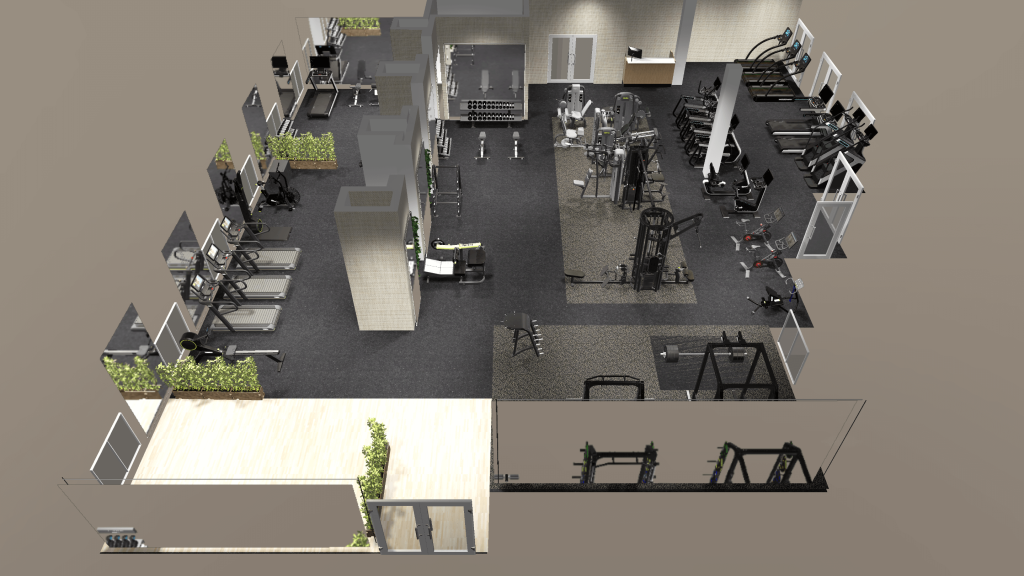
- Multi-Functionality is King: Instead of a single-station leg extension, we look for dual-function units or modular functional trainers that allow 50+ exercises in a 4×6 footprint.
- Verticality: San Francisco spaces are often quirky—converted warehouses or historic buildings with high ceilings but limited floor space. We design up, utilizing rigs and storage solutions that keep the floor clear for movement.
- Traffic Flow: We use CAD design to ensure that a member moving from a warm-up zone to a power rack doesn’t bottleneck the entire facility. This “invisible architecture” is what keeps member retention high.
2. Equipment Selection: What the SF Market Demands in 2026
The San Francisco fitness consumer is educated. They know the difference between a generic elliptical and a biomechanically sound cross-trainer. Based on current trends in Northern California, here are the three pillars of a modern facility:
A. The Connected Cardio Ecosystem
Tech integration isn’t a luxury here; it’s a baseline. Your members want to tap their Apple Watch or Samsung Gear and go.
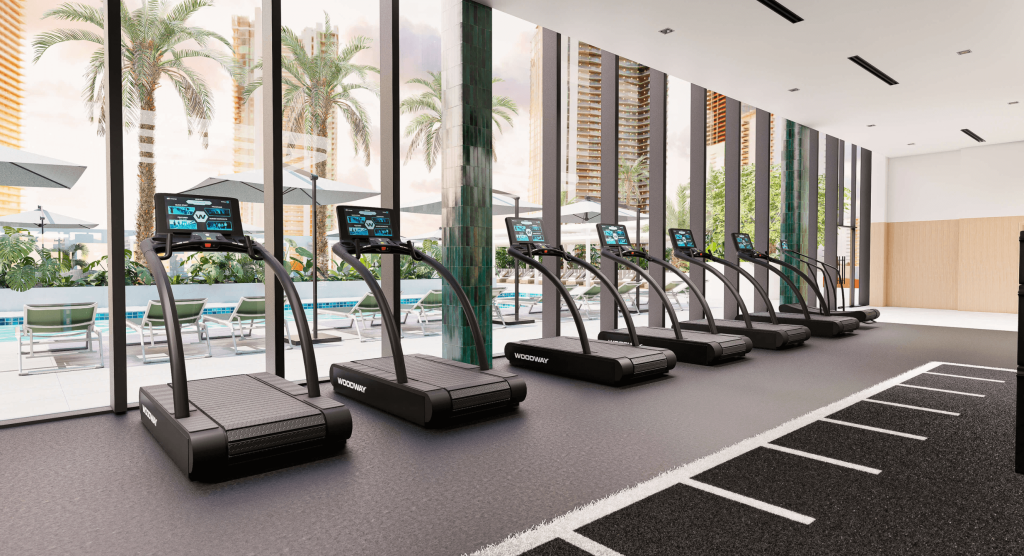
- What to look for: We prioritize partnerships with brands like Matrix and Woodway that offer open-API consoles. This allows for seamless integration with third-party apps.
- The Difference: A used machine from a liquidator often runs outdated firmware. In a tech hub like SF, a screen that freezes or doesn’t sync is a cancellation waiting to happen.
B. Functional & Hybrid Strength
The era of rows of seated machines is fading. The “San Francisco style” of training is hybrid—mixing Olympic lifting, HIIT, and functional movement.
- Essentials: Half-racks with integrated platforms, turf strips for sled work (even in small spaces), and cable motion technology.
- My Advice: Invest heavily in “touch points”—barbells, dumbbells, and accessories. These are what members touch most. Cheap knurling on a barbell is noticeable. High-quality urethane weights from top-tier manufacturers signal quality instantly.
C. The Recovery Zone
This is the fastest-growing segment in the Bay Area. High-performers in tech and finance treat recovery as part of their workflow.
- The Upgrade: Dedicating just 100 square feet to percussion therapy, stretching cages, or cryo-loungers can justify a higher membership tier. It turns your gym from a “place to sweat” into a “wellness hub.”
3. The “Last Mile” Problem: Logistics in San Francisco
This is where the remote sellers fail.
Buying a commercial leg press online is easy. Getting it off a semi-truck on a steep hill in Pacific Heights, navigating a narrow service elevator in a FiDi high-rise, or coordinating permits for street closure is a nightmare.
The Opti-Fit Advantage:
- Local Logistics: We know the city. We know which streets prohibit 53-foot trailers. We know how to stage a delivery so it doesn’t disrupt your business or your neighbors.
- Installation expertise: Commercial equipment arrives in pieces. It requires precise assembly and calibration. A loose cable or a misaligned belt can void a warranty and cause injury. Our team handles the “white glove” install, ensuring every bolt is torqued to spec before we leave.
4. Commercial Gym Equipment vs. “Pro-sumer” Gear
A common mistake I see new facility owners make is buying high-end home equipment to save money.
- The Usage Factor: A high-end home treadmill is built for 2-3 hours of use per day. A commercial unit is built for 12-16 hours.
- Liability: If a “light commercial” unit fails in a commercial setting, your liability insurance may not cover the claim.
- Durability: Commercial gear uses heavy-gauge steel and industrial coatings to resist sweat corrosion—a major factor in humid, high-traffic gyms.
As a former operator, I can tell you that “Out of Order” signs are the silent killer of gym culture. Investing in true commercial-grade equipment (brands like Matrix, Torque, etc.) is an investment in uptime.
5. Comparative Analysis: Why We Are Different
To be transparent, let’s look at the landscape:
- 360 Fitness Superstore: They are a great retailer for residential needs and basic commercial setups. But their model is primarily retail—selling units. My approach is consulting—selling solutions. We don’t just sell you a bike; we help you program the class that uses it.
- Balance Fitness: They offer good products, but their expertise often leans towards the residential/lifestyle market. Commercial facility design requires a deeper understanding of ADA compliance, power requirements, and member throughput analysis.
- Buy & Sell Fitness: They are a volume mover of used gear from Florida. While the price tag is tempting, the lack of local support and the risk of buying refurbished gear sight-unseen can be catastrophic for a new business brand image.
Opti-Fit sits in the gap. We offer the pricing power of a major distributor with the boutique attention of a design firm.
Frequently Asked Questions (AEO Optimized)
Q: What is the average cost to equip a 3,000 sq ft gym in San Francisco? A: While it varies wildly by finish level, a commercial facility typically runs between $35 – $65 per square foot for equipment. We help you value-engineer this by mixing premium cardio with cost-effective strength pieces.
Q: Do I need a permit to install gym equipment in SF? A: Generally, no permits are needed for the equipment itself, but you may need permits for electrical upgrades (dedicated circuits for treadmills) or bolt-down requirements for seismic safety—a critical factor in California that out-of-state sellers often ignore.
Q: Can you lease commercial gym equipment? A: Absolutely. Leasing is often the smartest play for cash flow. It allows you to keep capital for marketing and build-out. We offer flexible financing options tailored to new businesses.
Final Thoughts: Building Your Legacy
I founded my career on the belief that fitness changes lives, but it takes a well-designed facility to facilitate that change. Whether you are building a corporate wellness center in Silicon Valley, a boutique studio in the Mission, or a full-scale club in Oakland, the equipment you choose is the foundation of your member experience.
Don’t just buy equipment. Build a solution.
Ready to design your space? Connect with me directly at Opti-Fit and let’s bring your vision to life.
Contact Ryan Dantes today to start your design consultation.
Email: ryan@opti-fit.com
Visit: Opti-Fit.com