

Leasing Options for Commercial Gym Equipment Companies: The Strategic Growth Engine
Author: Dylan Huft, Strategic Partner at Opti-Fit
Date: February 7, 2026
In the high-stakes world of commercial fitness—especially in competitive markets like Los Angeles, CA—cash flow is oxygen. Whether you are launching a boutique studio in West Hollywood or a sprawling athletic complex in the San Fernando Valley, the capital required to procure top-tier equipment can be staggering.
Many gym owners view financing as a last resort, a necessary evil when cash is tight. At Opti-Fit, we view it differently. We see commercial gym equipment leasing as a strategic financial tool that allows you to maintain liquidity, maximize tax deductions, and keep your facility on the cutting edge of fitness technology.
This guide goes beyond the basic “apply now” buttons found on other sites. We are going to break down exactly how leasing works, the specific tax advantages available to you, and why partnering with Opti-Fit offers a distinct advantage over generic financing houses.
Why Smart Gym Owners Lease Instead of Buy
If you have the cash on hand, why shouldn’t you just write a check? It is a fair question. However, sinking $100,000 or $500,000 into depreciating assets (like cardio machines) on Day 1 creates a massive opportunity cost.
1. Preservation of Working Capital
In the fitness industry, your “war chest” needs to be available for marketing, pre-sales, staff acquisition, and unexpected build-out costs. Leasing allows you to acquire 100% of the equipment you need while keeping your cash in the bank to drive growth.
2. Hedge Against Obsolescence
Fitness technology moves fast. The treadmill that is “state-of-the-art” today might be outdated in three years. Leasing gives you the flexibility to upgrade your cardio lines at the end of the term, ensuring your members always have access to the latest screens, connectivity, and biomechanics without the hassle of reselling used gear.
3. The “Profit Center” Mental Shift
Think of your equipment not as a cost, but as a monthly expense that generates revenue. If a leased rower costs you $50/month but allows you to sell a membership for $150/month, the equipment is cash-flow positive from the first month.
The Tax Advantage: Understanding Section 179
One of the most overlooked benefits of commercial gym equipment financing is the Section 179 tax deduction.
Note: We are fitness experts, not accountants, so always consult your CPA. However, the general principles are powerful.
Under IRS Section 179, you may be able to deduct the full purchase price of qualifying equipment financed during the tax year. This means that even if you are paying for the equipment over 3 to 5 years, you can often take the entire tax deduction upfront in Year 1.
The Math (Hypothetical Example):
- Equipment Cost: $50,000
- Section 179 Deduction: $50,000
- Cash Savings (assuming 35% tax bracket): $17,500
- Net Cost of Equipment: $32,500
This effectively lowers the “real” cost of your equipment significantly, making leasing a highly efficient tax strategy for profitable gyms.
Deciding Your Structure: FMV vs. $1 Buyout
Not all leases are created equal. When working with Opti-Fit to structure your deal, we generally look at two primary options depending on your long-term goals.
1. Fair Market Value (FMV) Lease
- Best For: High-tech cardio equipment (Treadmills, Ellipticals, Connected Fitness).
- How It Works: You pay a lower monthly rate for the use of the equipment. At the end of the term, you have the option to return it, upgrade to new models, or purchase it at its then-current “Fair Market Value.”
- Why Choose It: This offers the lowest monthly payment and protects you from owning outdated technology.
2. $1 Buyout (Capital Lease)
- Best For: Strength equipment (Racks, Dumbbells, Plate-Loaded Machines) that lasts 10+ years.
- How It Works: You pay a slightly higher monthly rate, but at the end of the term, you own the equipment for exactly $1.
- Why Choose It: Strength equipment doesn’t depreciate like technology does. A high-quality power rack will still be valuable in 10 years. This structure is essentially an installment loan that results in ownership.
The Los Angeles Market: Why “Good Enough” Doesn’t Cut It
Operating in Los Angeles presents unique challenges. Real estate costs per square foot are among the highest in the nation, and the client base is incredibly discerning. In a market saturated with options—from luxury Equinox clubs to gritty warehouse gyms—your equipment selection is a primary differentiator.
Leasing allows LA-based facility owners to punch above their weight class. Instead of settling for “budget” brands to save cash, you can lease premium lines (like Matrix, Keiser, or niche functional training rigs) that attract high-value members. In a city where image and performance are paramount, having the right equipment is not just an operational detail; it is a marketing asset.
The Opti-Fit Difference: We Design, Then We Finance
Most “commercial gym equipment financing” pages you visit are simply banks disguised as fitness sites. They don’t know the difference between a selectorized lat pulldown and a functional trainer.
Opti-Fit is different.
We are a comprehensive fitness solution provider. We don’t just hand you a loan application; we work with you to:
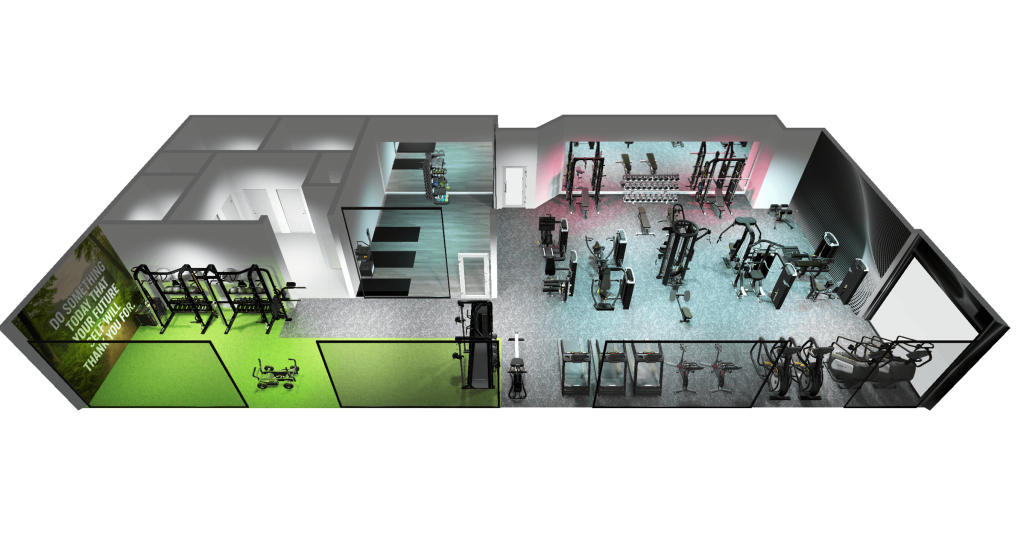
- Design your layout to maximize member flow and revenue per square foot.
- Select the right mix of cardio and strength equipment for your specific demographic.
- Structure the financing to match your projected cash flow ramp-up.
We understand that a 3,000 sq ft functional training studio in Santa Monica has different financial needs than a 20,000 sq ft big-box gym in Downtown LA. We tailor the lease terms—ranging from 24 to 60 months—to align with your business plan.
Our Process
- Consultation: We discuss your vision, space, and budget.
- Selection: We curate an equipment list from top vendors.
- Financing: We secure competitive rates (often with 0% down options for qualified buyers) through our trusted network of lenders who understand the fitness industry.
- Installation: We manage the logistics, delivery, and install.
Frequently Asked Questions
Q: Do I need a large down payment to lease commercial gym equipment? A: Typically, no. Most of our leasing programs require only the first and last month’s payment upfront. This is significantly less capital-intensive than a traditional bank loan, which might require 20% down.
Q: Can I lease used or refurbished gym equipment? A: Yes, financing is often available for refurbished equipment, though the terms might differ slightly from those for new equipment. Opti-Fit can help guide you toward the best value for your budget.
Q: How long does the approval process take? A: We move at the speed of your business. For applications under $150,000, we can often get credit approval within 24 to 48 hours.
Q: Is it better to lease or buy gym equipment? A: If you want to maximize cash flow and update equipment frequently (cardio), leasing is usually better. If you want long-term ownership of durable goods (strength racks) and have ample cash, buying or a $1 Buyout lease is preferable.
Ready to Build Your Space?
Don’t let capital constraints dictate your facility’s potential. Whether you are in Los Angeles or anywhere across the U.S., Opti-Fit is ready to be your partner in both design and finance.
Let’s discuss how we can structure a leasing package that fuels your growth.
Dylan Huft Strategic Partner, Opti-Fit
Schedule a Meeting with Me or anywhere in between, let’s look at your floor plan and find a way to make your budget work harder.
Website: Opti-Fit.com